Case 01 — AI Reporting Assistant
Aura
Fast answers, with the source one click away.
Role
Product Design · UX Research — end-to-end (0→1)
Scope
AI reporting flow · Trust & auditability · Table system
Year
2025
3×
More reports discovered by assistant users vs. non-users
#1
Assistant entry point — reporting became its most-used feature
+30%
Collaborative activity — users returned to share with managers more often
Measured during beta with a cohort of ~90 users, comparing use with and without the assistant.
● Play with a live prototype
Send a message, open the report, try voice mode.
Context
Aura is the AI reporting assistant inside a B2B SaaS platform for multi-location brands — I was the Product Designer bringing reporting into it.
Users could ask a question, get a summarized answer, and move into the full report when they needed proof. The work asked whether AI could make reporting faster without breaking trust.
Problem
A chat reply wasn't enough — users had to trust the number.
They needed to see which filters and date range produced it, know the data was fresh, and get from the AI summary back to the source report to verify it, share it with leadership, and reuse it next month. Sending them out of the assistant too early would break the value of the AI.
Process
- 01Mapped how customers report todayWeekly and monthly pulls, screenshots, exports, and summaries sent to leadership — real workflows, not a novelty for AI to decorate.
- 02Ran discovery and prototype tests with enterprise clientsTo learn what they needed before trusting an AI answer, and whether they wanted a chat-first or report-first experience.
- 03Tested two directions; neither won aloneAn in-chat canvas felt fast but less trustworthy for deep reporting; a full redirect felt complete but reduced the assistant to a shortcut.
- 04Landed on a hybridThe assistant answers, Reporting proves.
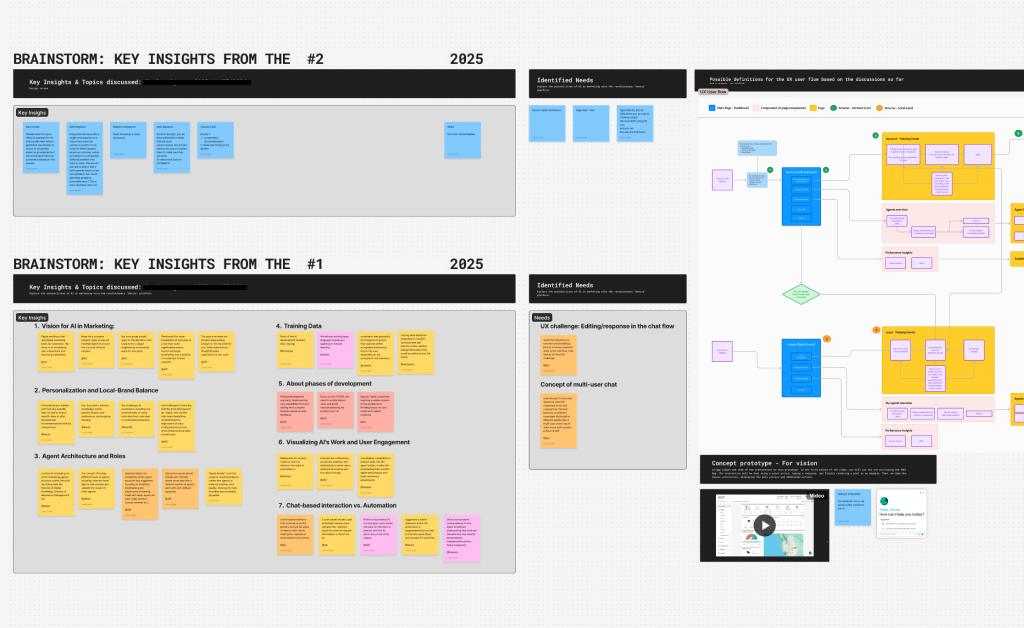
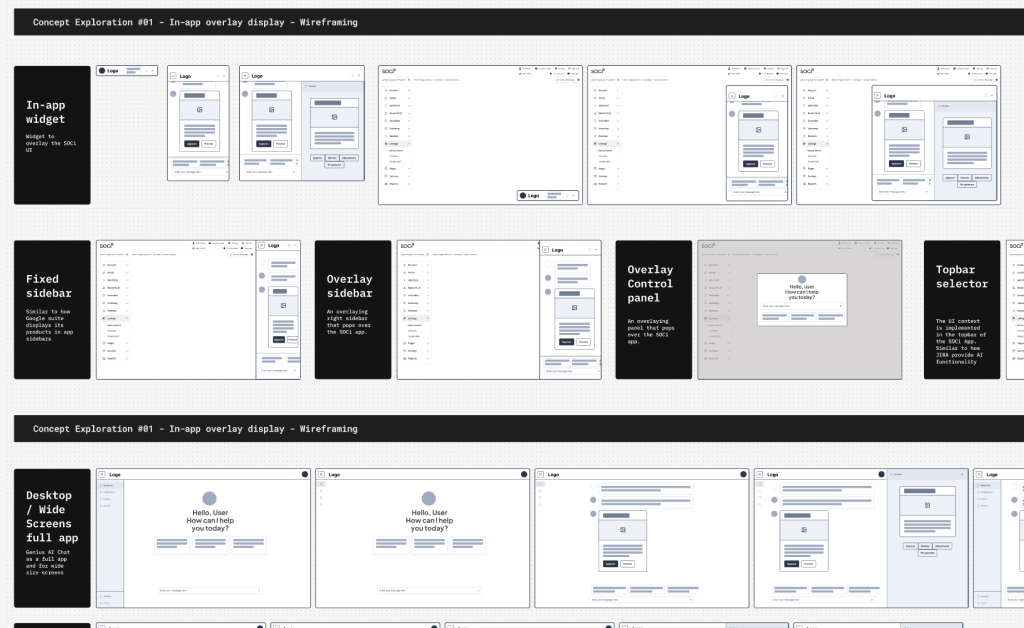
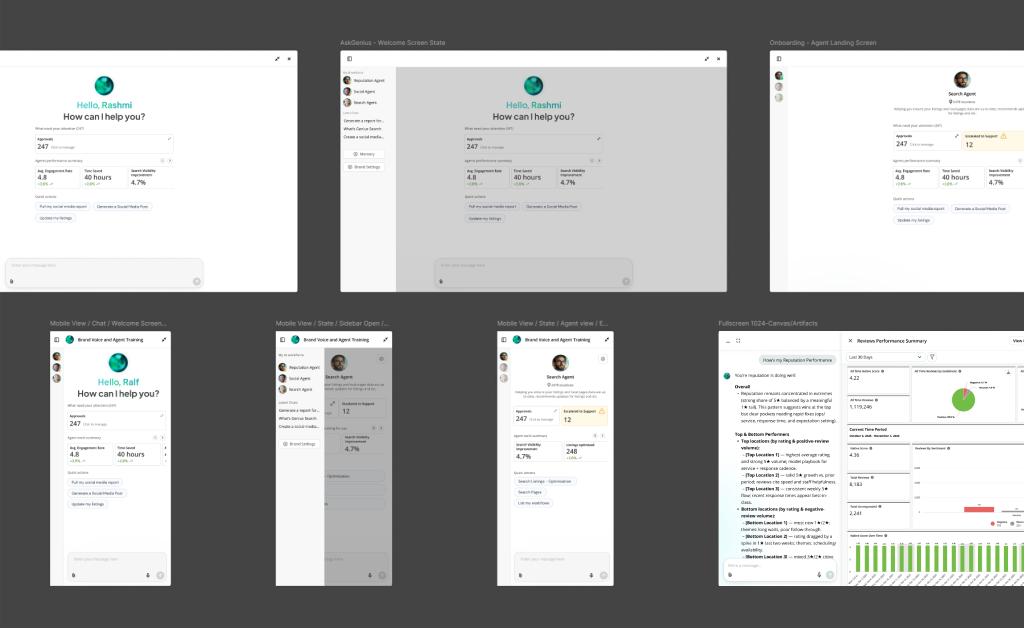
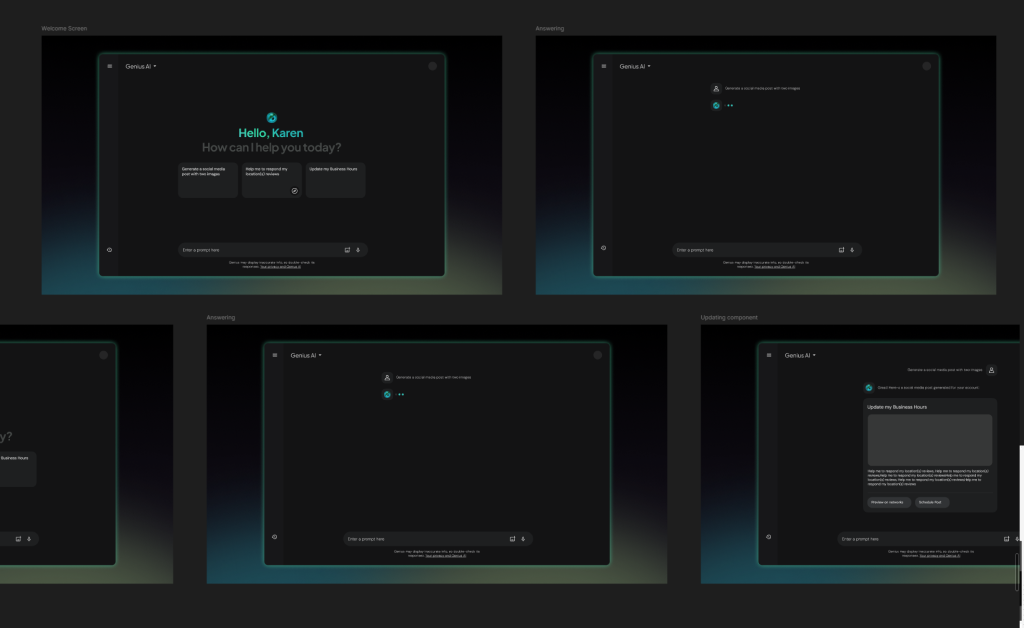
Discovery & synthesis
Brainstorm boards distilling key insights and needs into an early UX user flow
01 / 04
Insight
The opportunity was not more data. It was less interpretation work.
Reporting teams already had dashboards, charts, and tables — the costly part was reading across locations, deciding what mattered, and translating it into a credible update for leadership. I reframed the product question from "Can AI generate a report?" to "Will someone trust this answer enough to put their name on it?" That shift changed the solution: instead of recreating a dashboard inside chat or sending users away with a link, Aura leads with a concise analysis, makes its scope and evidence visible, and keeps the full filtered report one click away for verification or export.
Trade-offs
- 01Hybrid over chat-only or full redirectAn in-chat canvas felt fast but less trustworthy for deep reporting; a full redirect felt complete but reduced the assistant to a shortcut. I chose a hybrid — the assistant answers, Reporting proves — accepting more to build in exchange for trust that survives scrutiny.
- 02Show the filters over a cleaner replyA bare answer read better, but users wouldn't stake their name on a number they couldn't audit. Surfacing filters, date range, and freshness added density, but made every answer defensible.
- 03Rebuild the answer table over reusing the old oneShipping the existing table was faster; its narrow columns, raw timestamps, and unclear row limits would have undercut trust. I rebuilt it so the proof layer held up.
Proposal
Fast answer first, full confidence one click away - AI as a Data Analyst at your service
- Prompt
- AI summary + export
- Visible filters
- "Open report" deep link
- Full KPIs & charts
- ↑ Prototype above
Result
- 01MVP model that matched how teams actually workAnswer in chat, verify in Reporting, reuse via save / share / export — users didn't want another chart, they wanted the expertise of a data analyst.
- 02Trust made first-classEvery answer shows its filters, freshness, and data source — so users could put their name on the number.
- 03Reusable design components and reporting patterns for v2Reviews, posts, listings, and competitor data inherited the same audit-ready table system.
- 04A clear build direction for product and engineeringDesign flows, documentation, and POC success criteria gave the team measurable targets to ship against.
Next case
Sinal
Local search fixes humans can trust, review, and scale